
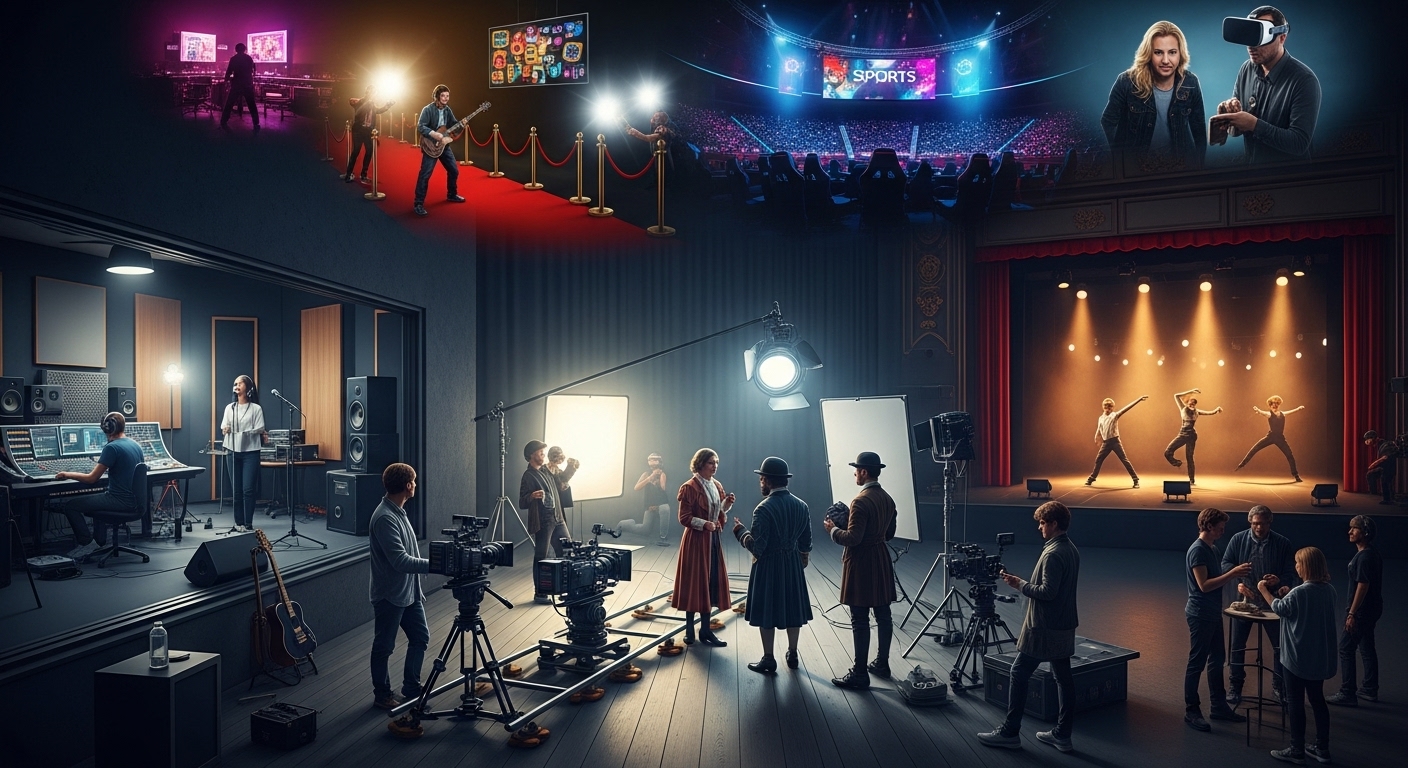
The Ever-Evolving World of Entertainment: A Journey Through Time

Entertainment is an essential part of human life. From the earliest days when humans gathered around campfires to share stories, to today’s digital streaming platforms offering an endless array of movies, music, and games, entertainment has continuously evolved, reflecting the changing tastes, technologies, and cultures of society. It has the power to inspire, connect, and even challenge us in ways that few other mediums can. This blog explores the multifaceted world of entertainment, its history, modern forms, and its impact on society.
The Origins of Entertainment
Entertainment, in its most basic form, is about storytelling and expression. Ancient humans entertained themselves through oral traditions, telling myths, legends, and folk tales around fires or during communal gatherings. These stories often had dual purposes—they amused and educated, instilling moral lessons or cultural values. Dance, music, and visual arts were also integral to early entertainment, serving ceremonial or celebratory roles in communities.
In ancient civilizations like Egypt, Greece, and Rome, entertainment became more structured. The Greeks introduced theater, a formal art form combining acting, storytelling, and music. They performed tragedies and comedies in amphitheaters, and these performances explored deep philosophical questions about humanity, fate, and society. Similarly, the Romans took entertainment to grander scales with gladiatorial games, chariot races, and public spectacles that drew thousands of spectators, blending thrill, drama, and public engagement.
The Golden Age of Cinema
Fast forward to the late 19th and early 20th centuries, and the invention of motion pictures revolutionized entertainment. Cinema emerged as a powerful medium that could bring stories to life like never before. Silent films captured audiences’ imaginations through expressive acting and innovative visual storytelling, while the introduction of sound in movies added a new dimension, combining dialogue, music, and effects.
Hollywood became the epicenter of this new form of entertainment, producing movies that defined genres, introduced iconic stars, and created global cultural phenomena. The studio system shaped the industry, developing stars like Charlie Chaplin, Marilyn Monroe, and Humphrey Bogart, whose influence still resonates today. Over time, cinema expanded to include animation, experimental films, and documentaries, reflecting diverse perspectives and storytelling techniques.
Television: Entertainment in Every Home
While cinema dominated the early 20th century, television emerged as the next revolutionary medium in the mid-20th century. Television brought entertainment directly into homes, making it more accessible than ever. Families gathered around the TV to watch sitcoms, dramas, variety shows, and news programs, creating shared cultural moments.
Television also gave rise to serialized storytelling, with shows spanning multiple episodes or seasons, allowing for deeper character development and plot complexity. From classic series like “I Love Lucy” and “The Twilight Zone” to modern hits like “Game of Thrones” and “Stranger Things,” TV has continually adapted to audience tastes, introducing innovative storytelling techniques and diverse narratives.
Music: The Universal Language
Music has always been a cornerstone of entertainment, transcending language, culture, and geography. From classical compositions to contemporary pop, rock, hip-hop, and electronic music, music connects people on an emotional level. The evolution of music reflects technological innovations, cultural shifts, and creative experimentation.
The 20th century saw dramatic changes in music consumption and production. The invention of recording technology, radio, and later digital streaming platforms allowed music to reach millions globally. Artists became cultural icons, influencing fashion, social movements, and lifestyles. Today, music remains a dynamic form of entertainment, blending genres, embracing collaboration, and leveraging technology for new experiences, such as virtual concerts and immersive audio experiences.
Gaming: Interactive Entertainment
The rise of video games introduced a new form of interactive entertainment. Unlike movies or TV, games allow individuals to actively participate, make choices, and influence outcomes. From early arcade games like Pac-Man and Space Invaders to modern open-world epics like The Legend of Zelda, Fortnite, and immersive virtual reality experiences, gaming has grown into a multi-billion-dollar industry with global appeal.
Gaming culture has also expanded beyond the console or PC. Online streaming platforms, esports tournaments, and community-driven content creation have turned gaming into a social phenomenon. It’s no longer just a pastime; it’s a lifestyle and career path for many, demonstrating the profound impact interactive entertainment has on modern society.
The Digital Revolution and Streaming Era
The 21st century has seen entertainment undergo a seismic shift with the rise of digital platforms. Streaming services have transformed how we consume movies, TV shows, and music, offering on-demand content without the constraints of schedules or physical media. Platforms allow audiences to binge entire series, explore global content, and discover niche genres previously inaccessible.
Social media and user-generated content have also democratized entertainment, allowing creators to reach audiences directly. Platforms like YouTube, TikTok, and Instagram have given rise to influencers, viral trends, and a new era of participatory entertainment where viewers are also creators. This digital revolution emphasizes personalization, interactivity, and global connectivity.
Live Performances and Experiential Entertainment
Despite the rise of digital entertainment, live performances remain a vital part of the entertainment landscape. Concerts, theater productions, comedy shows, and festivals offer experiences that digital media cannot replicate. The energy of a live audience, the immediacy of performance, and the shared experience create lasting memories and emotional connections.
Experiential entertainment has also expanded into theme parks, immersive exhibitions, and interactive installations, blending technology and creativity to offer multisensory experiences. From virtual reality rides to interactive theater experiences, these forms of entertainment engage audiences in innovative ways, proving that the future of entertainment is as much about experience as it is about content.
The Psychological and Social Impact of Entertainment
Entertainment is not merely a diversion; it has profound psychological and social impacts. It provides an escape from daily stress, fosters empathy by exposing audiences to different perspectives, and can inspire creativity and innovation. Shared entertainment experiences strengthen social bonds, whether through fandoms, live events, or online communities.
Moreover, entertainment often reflects societal issues, challenges norms, and sparks dialogue. Movies, music, and literature can highlight social injustices, explore identity and human behavior, and influence public opinion. The impact of entertainment on culture and society underscores its importance beyond mere amusement.
The Future of Entertainment
Looking ahead, the future of entertainment promises even greater innovation. Advances in artificial intelligence, virtual reality, augmented reality, and immersive technologies are redefining storytelling and audience engagement. Personalized experiences, interactive narratives, and global content exchange will shape how people consume and participate in entertainment.
As technology evolves, the boundaries between creator and audience, reality and fiction, and physical and digital experiences will continue to blur. Entertainment will become increasingly inclusive, interactive, and multidimensional, reflecting the complexity and diversity of human imagination.
Conclusion
Entertainment is an ever-changing, multifaceted phenomenon that mirrors the evolution of human society. From ancient storytelling to modern digital platforms, it has continually adapted to meet the needs, desires, and curiosities of audiences. It entertains, educates, inspires, and connects people across generations and geographies.
The journey of entertainment is a testament to human creativity, resilience, and the desire for connection. As we look to the future, the possibilities for innovation and engagement are limitless. One thing remains certain: entertainment will continue to captivate, challenge, and unite us in ways that are both timeless and ever-evolving.